
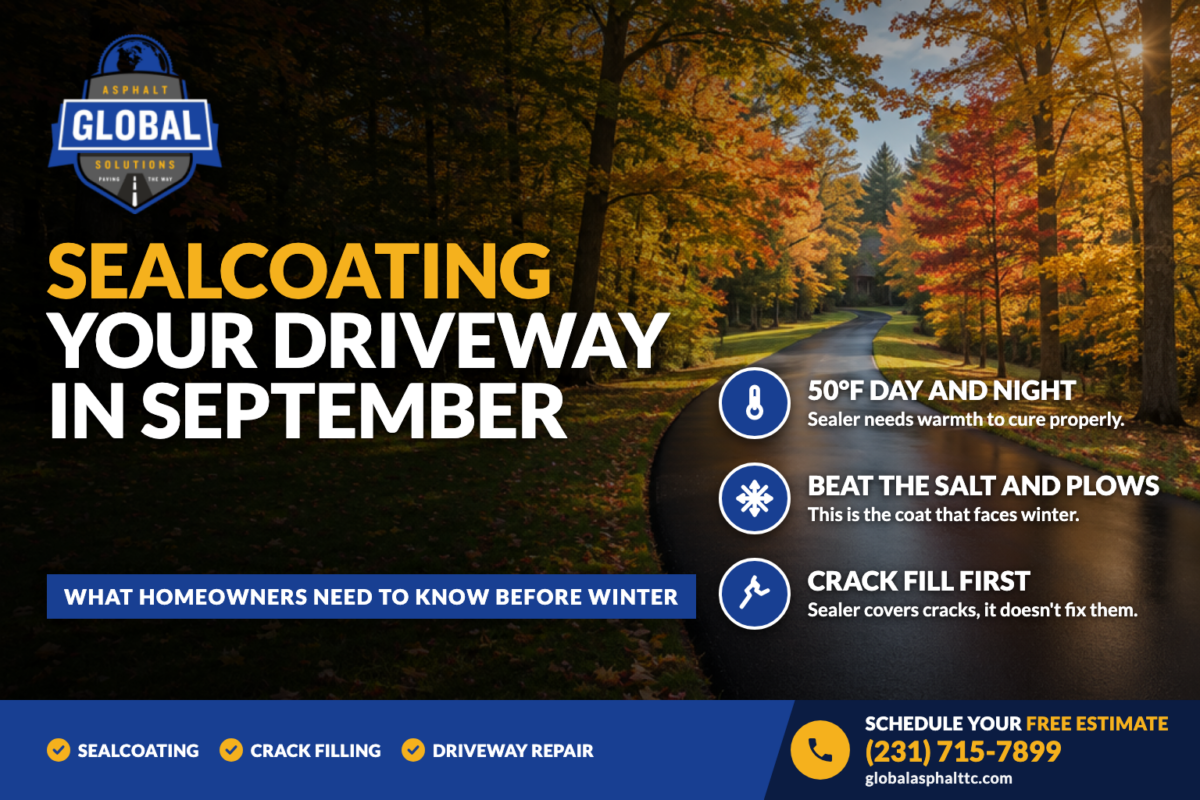
September is the last reliable month to sealcoat a driveway in Northern Michigan. The days are still warm, the summer rush is easing, and the winter that will do the most damage to your asphalt is only a couple of months away. It is also the month when homeowners most often call too late.
At Global Asphalt, we sealcoat driveways throughout Traverse City every fall, and we know exactly how quickly the window closes. Here is what you need to know to get your driveway protected before the snow flies, and what to do if the weather turns early.
Why September Works (and Why October Usually Doesn’t)
Sealcoat is a water-based coating that has to dry and cure, and that only happens reliably in warm, dry conditions. The rules of thumb:
- Temperatures of at least 50°F, day and night, for about 24 hours after application
- No rain for 24 to 48 hours
- A dry driveway surface, with no morning dew sitting on it
Early September in Traverse City checks all three boxes most days. By October, cold nights, heavy dew and shorter days make proper curing hit or miss, and a sealcoat that does not cure will peel, track onto your garage floor, or simply wear off in the first winter.
Once nights start dipping into the 40s, the season is effectively over.
Why a Fall Sealcoat Matters Most
A coat applied in September is the one that faces winter. It is the layer that stands between your asphalt and:
- Road salt and de-icers tracked in from the street
- Snowmelt soaking into the surface and refreezing
- Plow blades and shovel edges scraping the pavement
- Months of freeze-thaw cycles working on every tiny crack
An unsealed, oxidized driveway absorbs water. A freshly sealed one sheds it. That single difference is why sealed driveways come out of winter looking the same, while unsealed ones come out with new cracks.
What a Proper Sealcoat Job Includes
Sealcoating is more than spraying on black paint. A job done properly looks like this:
- Cleaning. Dirt, leaves, sand and loose material are blown or washed off. Sealer only bonds to clean asphalt.
- Oil spot treatment. Spots where a car has dripped oil are primed so the sealer will stick.
- Crack filling. Cracks are filled with hot rubber crack sealant first. Sealcoat is a surface coating and will not fill open cracks.
- Edging. Grass and soil along the edges are trimmed back so the sealer reaches the full edge of the pavement.
- Application. Sealer is applied evenly across the surface, typically in two coats on residential driveways.
- Curing. The driveway is blocked off for 24 to 48 hours before vehicles return.
If a quote skips crack filling, you are paying to cover up a problem instead of fixing it.
How to Get Your Driveway Ready
A little preparation on your end makes the job faster and the finish better:
- Move all vehicles, trailers and bins off the driveway the night before
- Turn off lawn sprinklers the day before and keep them off for two days after
- Trim grass along the driveway edges
- Plan where you will park for 24 to 48 hours
- Keep kids, pets and bikes off the surface until it is fully dry
- For the first week, avoid turning the steering wheel while the car is stopped
New Driveway? Wait Until Next Year
If your driveway was paved this summer, do not sealcoat it yet. New asphalt needs 6 to 12 months to cure and release its oils before sealer will bond properly. A driveway paved in August is a candidate for its first sealcoat next summer, not this fall.
If you are still deciding whether to pave this year, our post on whether it is too late to pave your driveway covers what to expect.
What If the Weather Turns Early?
Some years the cold arrives in mid-September. If that happens, the right move is not to sealcoat anyway and hope for the best. It is to do the parts of the job that still work in cooler weather:
- Crack filling. Hot rubber crack sealant can be applied later into the fall than sealcoat, and it is the single most important step for getting through winter without damage.
- Patching and repairs. Potholes and broken edges can still be repaired before the ground freezes.
- Sealcoating in spring. Get on the list now for late spring, before the schedule fills.
Be wary of anyone who offers to sealcoat in cold weather. The coat will not cure, and you will be paying to have it done again.
Get on the Fall Schedule
The September sealcoating window in Northern Michigan is short, and it fills fast. If your driveway has faded to gray, is showing small cracks, or has not been sealed in the last two or three years, now is the time.
Global Asphalt provides professional driveway sealcoating, crack filling and repairs throughout Traverse City and the surrounding communities.
Call (231) 715-7899 or request a free estimate online, and let’s get your driveway sealed before winter.