
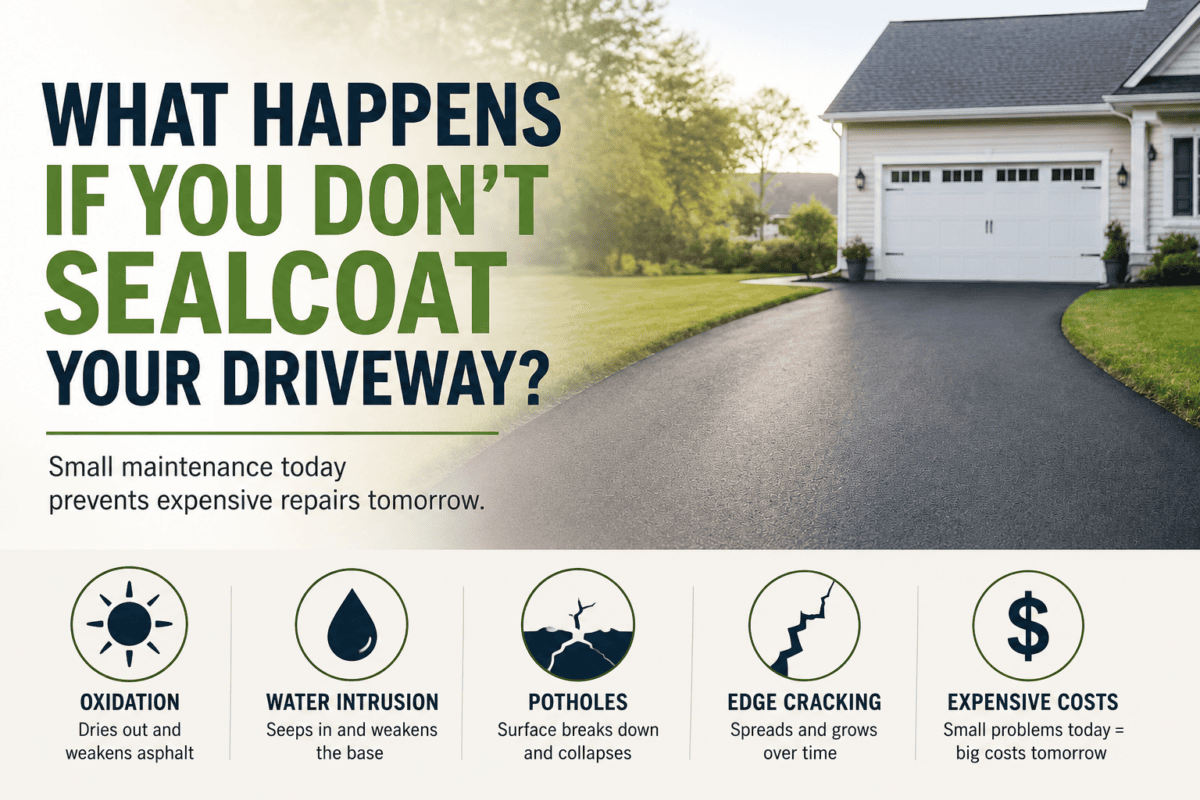
If you live in Northern Michigan, your asphalt driveway takes a beating every single year. Between freezing temperatures, snow, ice, salt, rain, and summer heat, asphalt surfaces in Traverse City are constantly expanding, contracting, and wearing down.
Many homeowners put off sealcoating because their driveway “still looks okay.” Unfortunately, asphalt damage often starts long before major cracks or potholes appear. By the time the damage becomes obvious, repairs can become expensive very quickly.
If you want to avoid a cracked asphalt driveway and costly replacement bills, regular sealcoating and driveway maintenance are essential.
What Does Sealcoating Actually Do?
Sealcoating adds a protective barrier over your asphalt surface. Think of it like sunscreen or waterproofing for your driveway.
A quality sealcoat helps protect asphalt from:
- UV rays and oxidation
- Water penetration
- Freeze-thaw damage
- Salt and chemical exposure
- Oil and fuel spills
- Surface wear from traffic and snowplows
Without that protection, asphalt slowly begins to dry out, weaken, and crack.
1. Oxidation Starts Breaking Down Your Asphalt
One of the biggest threats to asphalt is oxidation.
Over time, sunlight and oxygen cause the oils inside asphalt to dry out. When this happens, the surface changes from a rich black color to a faded gray appearance. That faded look is often the first warning sign that your driveway is losing flexibility and strength.
As oxidation worsens, asphalt becomes:
- Brittle
- Dry
- More prone to cracking
- Easier to chip and crumble
This is especially common in Northern Michigan, where long winters and strong seasonal changes speed up the aging process.
If left untreated, small surface issues can eventually turn into a severely cracked asphalt driveway that requires extensive repair work.
2. Water Intrusion Creates Serious Damage
Water is one of asphalt’s biggest enemies.
Once small cracks begin forming, water seeps below the surface and starts weakening the foundation underneath the driveway. In Michigan, this becomes even more dangerous during winter.
Here’s what happens:
- Water enters small cracks
- Temperatures drop below freezing
- Water freezes and expands
- Cracks become larger
- Asphalt weakens further
This freeze-thaw cycle repeats all winter long and is one of the leading causes of asphalt damage during Michigan winters.
Eventually, the surface begins to sink, separate, and break apart.
3. Potholes Begin to Form
Once water gets underneath the asphalt surface, potholes are usually not far behind.
As the base weakens, traffic pressure from vehicles causes sections of asphalt to collapse. Small holes quickly grow larger, especially after snowmelt and spring rains.
Potholes can:
- Damage vehicles
- Create tripping hazards
- Hold standing water
- Accelerate further driveway deterioration
What may have started as a few small cracks can quickly turn into major asphalt repair costs.
4. Edge Cracking Starts Spreading
Many homeowners overlook edge cracking until it becomes severe.
The edges of your driveway are often the weakest areas because they have less structural support. Without sealcoating and proper maintenance, moisture easily penetrates these vulnerable sections.
Common causes of edge cracking include:
- Water erosion
- Snowplow damage
- Poor drainage
- Freeze-thaw cycles
- Lack of sealcoating protection
Once the edges begin crumbling, damage can spread rapidly across the rest of the driveway.
5. Replacement Costs Become Much More Expensive
Sealcoating is relatively affordable compared to full asphalt replacement.
Ignoring regular driveway maintenance in Traverse City can eventually lead to:
- Crack filling
- Large patch repairs
- Base failure
- Full driveway replacement
A complete asphalt replacement can cost thousands more than preventative maintenance.
In many cases, homeowners could have extended the life of their driveway by several years simply through routine sealcoating and crack repair.
How Often Should You Sealcoat an Asphalt Driveway?
Most asphalt driveways in Michigan should be sealcoated every 2–3 years depending on:
- Sun exposure
- Traffic levels
- Drainage conditions
- Winter severity
- Existing asphalt condition
Regular inspections can help catch problems early before they turn into expensive repairs.
Signs Your Driveway Needs Sealcoating
You may need sealcoating if your driveway has:
- Faded gray coloring
- Small surface cracks
- Rough texture
- Minor edge deterioration
- Water soaking into the surface instead of beading up
If you notice these warning signs, it’s a good time to schedule an inspection before the next Michigan winter causes additional damage.
Protect Your Driveway Before Small Problems Become Big Repairs
A properly maintained asphalt driveway not only looks better, but also lasts significantly longer.
At Global Asphalt, we help homeowners throughout Traverse City protect their driveways with professional:
- Asphalt sealcoating
- Crack filling
- Pothole repair
- Residential asphalt maintenance
- Preventative maintenance services
If your driveway is starting to show signs of wear, now is the best time to address the problem before replacement becomes necessary.
Contact Global Asphalt today for a free estimate on professional driveway maintenance in Traverse City and surrounding Northern Michigan areas.