
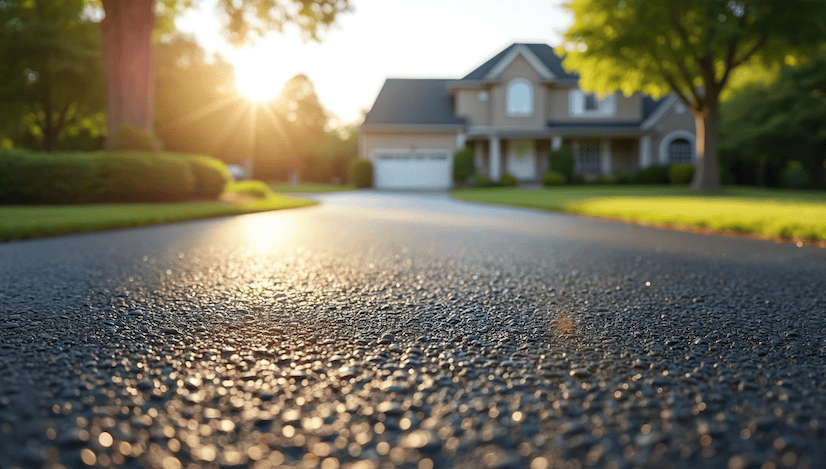
Winter in Northern Michigan can be tough on asphalt driveways. Between freezing temperatures, snowplows, ice melt, and repeated freeze-thaw cycles, your driveway may have taken a beating over the past few months. As spring arrives in Traverse City, Michigan, it’s the perfect time for homeowners to inspect their driveways and address any damage before it gets worse.
A simple spring inspection can help you catch small problems early and avoid costly repairs later. Use this Spring Driveway Inspection Checklist to evaluate the condition of your asphalt driveway after a long Michigan winter.
1. Check for Cracks in the Asphalt
Cracks are one of the most common issues caused by Michigan’s freeze-thaw cycles. Water seeps into small openings during winter, freezes, expands, and causes the asphalt to split.
Look for:
- Hairline cracks forming across the surface
- Long cracks running down the driveway
- Spiderweb or alligator cracking patterns
Small cracks can often be repaired with professional asphalt crack filling, which prevents water from entering and causing further damage.
2. Look for Potholes or Soft Spots
Potholes develop when cracks allow water to penetrate beneath the surface, weakening the base layer of the driveway. As vehicles drive over the weakened area, the asphalt collapses.
Traverse City homeowners should inspect their driveway for:
- Loose asphalt or crumbling edges
- Small holes forming in the pavement
- Soft or sinking areas underfoot
Early pothole repair can prevent the damage from spreading and keep your driveway safe and smooth.
3. Inspect Drainage Around Your Driveway
Proper drainage is critical for the longevity of asphalt. Standing water is one of the fastest ways to damage pavement in Northern Michigan.
Check for:
- Water pooling on the driveway after rain
- Low spots where water collects
- Areas where soil has eroded along the edges
If water consistently pools on your driveway, it may indicate a grading issue that should be addressed by a professional paving contractor.
4. Evaluate the Surface Condition
Over time, asphalt naturally oxidizes and loses its rich black color. This process makes the surface brittle and more vulnerable to cracking.
Signs your driveway may need maintenance include:
- Faded gray appearance
- Rough texture
- Small surface cracks beginning to form
A professional asphalt sealcoating service can restore the protective layer and extend the life of your driveway.
5. Check the Edges of the Driveway
The edges of a driveway are often the weakest part of the pavement. Snowplows, heavy vehicles, and erosion can cause edges to crumble over time.
Inspect for:
- Broken or crumbling asphalt edges
- Grass growing into the pavement
- Soil washing away along the sides
Reinforcing or repairing driveway edges early can prevent larger structural problems later.
When to Call a Professional Asphalt Contractor
While small issues can sometimes be handled with DIY solutions, larger problems should be evaluated by a professional paving contractor. If you notice multiple cracks, expanding potholes, or drainage problems, it may be time for professional repairs.
For homeowners in Traverse City and Northern Michigan, spring is one of the best times to schedule asphalt maintenance. Addressing damage early helps extend the life of your driveway and prevents more expensive repairs down the road.
Protect Your Driveway This Spring
Taking a few minutes to inspect your driveway this spring can save you hundreds or even thousands of dollars in future repairs. Catching problems early ensures your driveway stays safe, functional, and visually appealing for years to come.
If your driveway needs professional attention, Global Asphalt provides reliable residential paving, asphalt repair, and sealcoating services in Traverse City, Michigan.
Contact us today to schedule a driveway inspection and get your asphalt ready for the season ahead.