
If you live in Northern Michigan, your driveway or parking lot takes a beating year-round. Between freezing winters, snow plows, road salt, spring thaw cycles, and summer UV rays, asphalt surfaces in places like Traverse City experience some of the harshest conditions in the Midwest.
One of the most common questions homeowners and business owners ask is: “How long does asphalt sealcoating last in Michigan?”
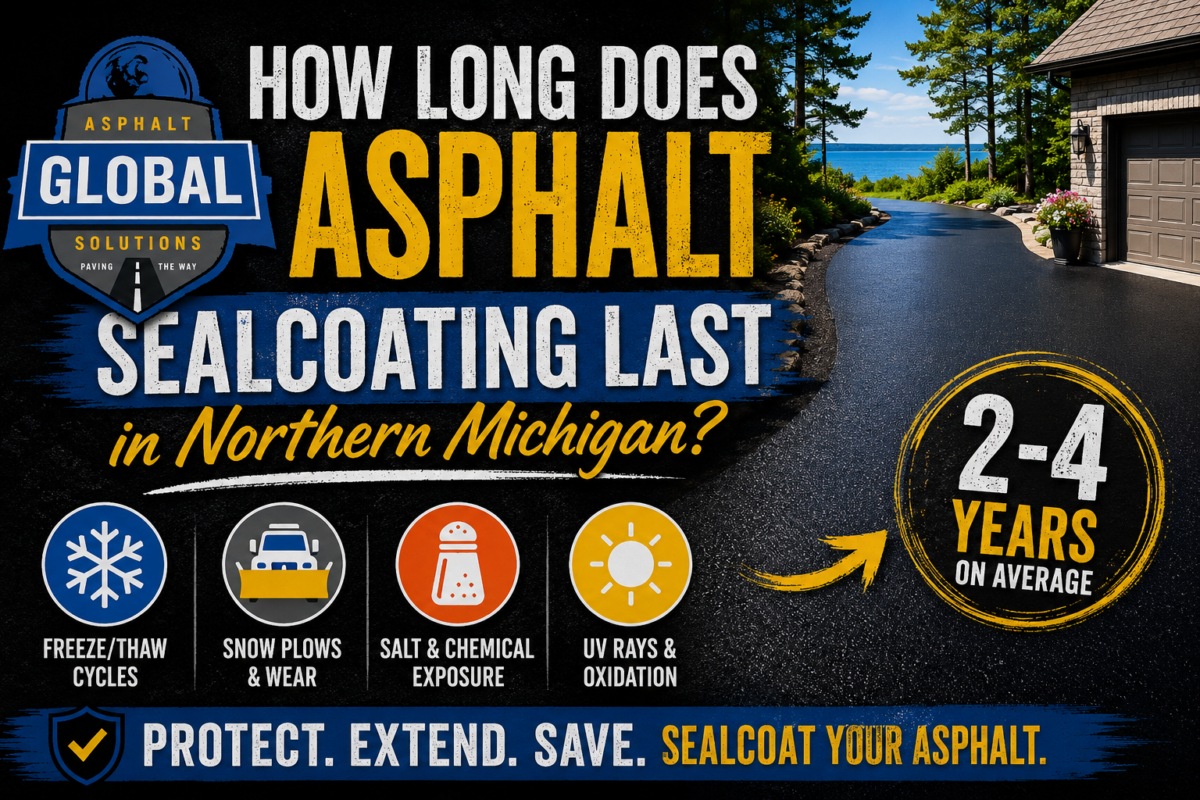
In Northern Michigan, professional asphalt sealcoating typically lasts 2 to 4 years, depending on weather exposure, traffic, drainage, and maintenance.
Why Sealcoating Matters in Northern Michigan
Asphalt sealcoating acts like sunscreen and armor for your pavement. It protects the asphalt surface from water intrusion, oxidation, UV damage, road salt, oil and gas spills, snow plow wear, and freeze/thaw cracking.
Without sealcoating, asphalt begins drying out and becoming brittle. Once that happens, cracks form quickly, especially during Michigan winters.
For homeowners searching for driveway sealcoating Michigan services, preventative maintenance is far cheaper than full asphalt replacement.
What Impacts Sealcoating Lifespan?
1. Freeze/Thaw Cycles
Northern Michigan weather constantly shifts between freezing and thawing temperatures during late fall, winter, and spring.
When water enters small cracks in asphalt, it freezes, expands, and forces those cracks to widen. Once the crack opens up, more water gets in, and the damage accelerates.
This cycle is one of the biggest reasons asphalt deteriorates faster in Michigan compared to warmer climates. Sealcoating helps reduce water penetration and slows down this process significantly.
2. Snow Plows and Winter Equipment
Snow plows are tough on asphalt surfaces. Repeated scraping can wear away protective coatings, especially on residential driveways, commercial parking lots, high-traffic entrances, and tight turning areas.
Metal plow blades can also catch raised cracks or weak pavement edges, causing additional surface damage.
If your driveway or lot sees heavy winter maintenance, you may need sealcoating closer to every 2 years rather than every 4.
3. Road Salt and Deicing Chemicals
Michigan winters mean lots of salt. While salt does not affect asphalt the same way it affects concrete, it can contribute to faster moisture penetration, surface breakdown, oxidation, and weakening of existing cracks.
Combined with freeze/thaw conditions, salt speeds up pavement aging dramatically.
That is why regular asphalt sealcoating Traverse City maintenance is so important for long-term pavement protection.
4. UV Damage and Oxidation
Even in Northern Michigan, sunlight plays a major role in asphalt deterioration.
Over time, UV rays dry out the natural oils in asphalt, causing fading, brittleness, surface cracking, and loss of flexibility.
Fresh asphalt has a rich black appearance because of these oils. As oxidation occurs, the surface turns gray and becomes increasingly vulnerable to cracking and potholes.
Sealcoating restores protection and helps slow oxidation.
Signs Your Asphalt Needs Sealcoating
You may need sealcoating if you notice:
- Faded gray asphalt color
- Small surface cracks
- Rough texture
- Water soaking into the pavement
- Minor edge cracking
- Surface wear near garage entrances or parking stalls
The earlier sealcoating is applied, the more money you typically save over time.
Waiting too long can lead to crack filling, pothole repair, asphalt patching, full resurfacing, or complete replacement.
How Often Should You Sealcoat Asphalt?
A common rule of thumb for Michigan asphalt is:
- Residential driveways: every 2 to 3 years
- Commercial parking lots: every 2 to 4 years, depending on traffic volume
Higher traffic areas usually require more frequent maintenance.
If you are asking how often should you sealcoat asphalt, the answer depends heavily on weather exposure, drainage, sunlight, traffic, snow plowing frequency, and existing pavement condition.
Best Time to Sealcoat in Traverse City
The best time for sealcoating in Northern Michigan is typically late spring, summer, and early fall.
Sealcoating requires warm temperatures, dry conditions, and proper curing time. Most professional contractors recommend temperatures above 50°F for best results.
Can Sealcoating Prevent Cracks and Potholes?
Sealcoating is not a magic fix for damaged asphalt, but it is one of the best preventative maintenance services available.
It helps slow oxidation, reduce water penetration, extend pavement life, improve appearance, and delay expensive repairs.
When combined with crack filling and proper drainage, sealcoating can dramatically extend the lifespan of your driveway or parking lot.
Protect Your Asphalt Investment
In Northern Michigan, asphalt maintenance is not optional. It is preventative protection against harsh weather conditions.
Whether you own a residential driveway or a commercial parking lot in Traverse City, regular sealcoating can help you avoid costly repairs and keep your pavement looking professional year-round.
If your asphalt is starting to fade, crack, or show signs of wear, now is the perfect time to schedule an inspection and maintenance plan before next winter arrives.