
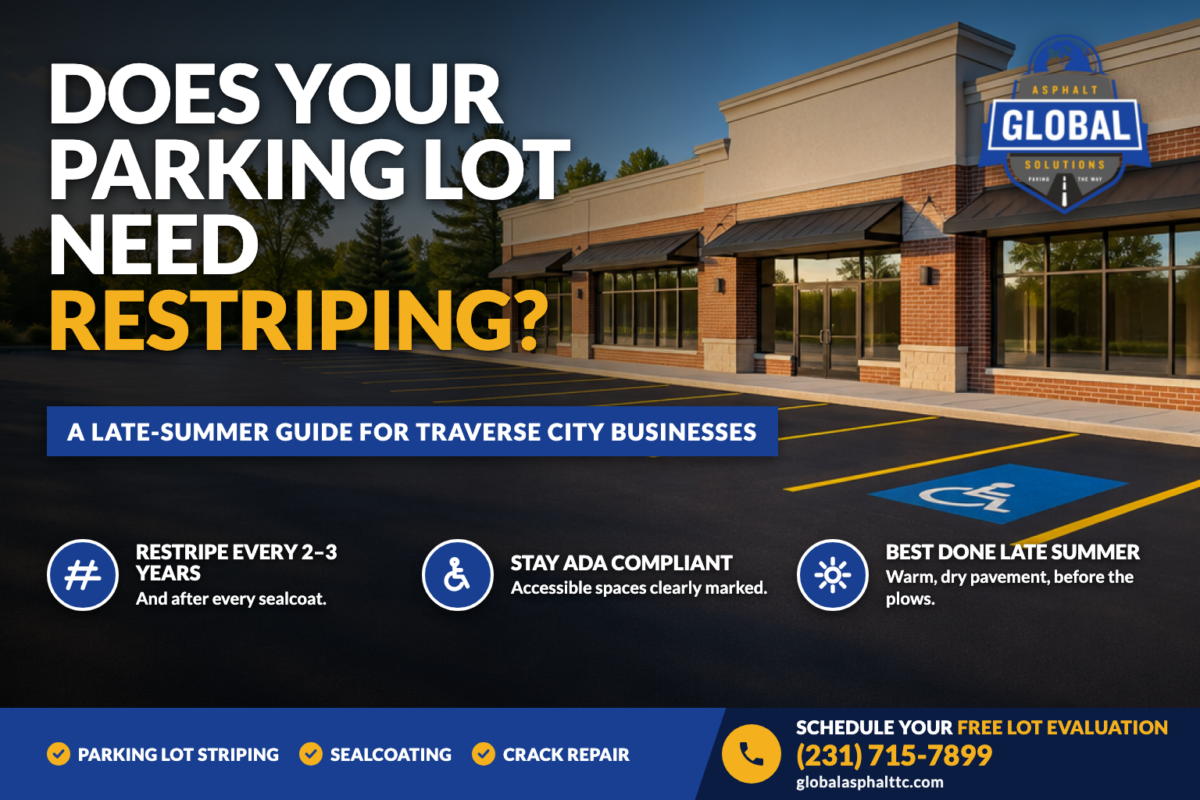
Your parking lot stripes do a lot of quiet work. They tell customers where to park, keep traffic moving in the right direction, mark the accessible spaces the law requires, and keep fire lanes clear. When those lines fade, the lot gets confusing, cars park crooked, and your property starts to look neglected.
Late summer is the ideal time for Traverse City businesses to take a hard look at their striping. At Global Asphalt, we handle parking lot striping alongside sealcoating and repair, and August is when we recommend getting it done. Here is how to tell whether your lot is due, and why the timing matters.
Why Striping Fades So Fast in Northern Michigan
Traffic paint takes more abuse here than in most of the country. Between one summer and the next, your lines are exposed to:
- Strong summer UV that bleaches paint and oxidizes the asphalt underneath
- Plow blades scraping the surface dozens of times each winter
- Road salt and sand that wear paint away like sandpaper
- Constant tire traffic, especially at entrances and high-turnover spaces
- Fresh sealcoat, which covers every existing line and requires restriping
Even a professional striping job with quality traffic paint will show noticeable wear after a Northern Michigan winter.
Signs It’s Time to Restripe
Walk your lot and look for these warning signs:
- Lines that have faded to gray or are only partly visible
- Customers parking crooked or straddling two spaces
- Accessible spaces where the blue paint or wheelchair symbol is worn away
- Directional arrows, stop bars and crosswalks that are hard to see
- Fire lane markings and curb paint that have faded
- A sealcoat that has been applied since the lot was last striped
- Changes to your business that call for a new layout, such as added spaces, pickup zones or delivery areas
If you spot two or more of these, your lot is due.
How Often Should a Parking Lot Be Restriped?
Most commercial lots in the Traverse City area need restriping every 2 to 3 years. High-traffic properties such as grocery stores, restaurants, medical offices and apartment complexes may need it sooner.
You should also plan to restripe:
- Every time the lot is sealcoated
- After any paving, patching or overlay work
- Whenever accessibility requirements or your layout change
Why Late Summer Is the Best Time
Timing striping correctly gets you a longer-lasting result and fewer disruptions:
- Warm, dry pavement. Traffic paint bonds and cures best on warm, dry asphalt. August and early September deliver that reliably.
- Ahead of the fall rush. Fall color season, back-to-school traffic and holiday shopping all bring more cars to Traverse City lots. Fresh lines make a busy lot safer.
- Before the plows. Once snow covers the lot, striping is impossible, and every plow pass wears the paint. New lines applied now have the longest possible life before the first scrape.
- One visit for everything. Late summer is also prime sealcoating season, so crack filling, sealcoating and striping can be scheduled together with a single closure.
ADA Basics Every Property Owner Should Know
Faded striping is more than a cosmetic problem. Accessible parking is governed by the Americans with Disabilities Act, and property owners are responsible for keeping those spaces clearly marked.
The ADA sets a minimum number of accessible spaces based on the size of the lot:
- 1 to 25 total spaces: 1 accessible space
- 26 to 50 spaces: 2 accessible spaces
- 51 to 75 spaces: 3 accessible spaces
- 76 to 100 spaces: 4 accessible spaces
- 101 to 150 spaces: 5 accessible spaces
- 151 to 200 spaces: 6 accessible spaces
In addition, at least one of every six accessible spaces must be van accessible, each space needs a marked access aisle, the spaces should be located on the shortest accessible route to the entrance, and each one needs proper signage. State and local codes may add requirements on top of these.
If the blue paint on your accessible spaces has faded, or your lot has been resurfaced since it was last laid out, a professional striping contractor can review the layout and bring it back into compliance.
More Than Lines: What a Full Striping Job Includes
A complete parking lot striping project typically covers:
- Parking stalls, including compact and angled spaces
- Accessible spaces, access aisles and symbols
- Directional arrows, stop bars and crosswalks
- Fire lanes, no-parking zones and loading areas
- Curb painting
- Custom markings such as reserved, pickup or electric vehicle spaces
A good contractor will also flag layout problems, such as spaces that are too narrow or aisles that do not leave room for delivery trucks, before the paint goes down.
Pair Striping with Sealcoating and Crack Repair
Striping is always the last step in pavement maintenance. If your lot also needs attention, the right order is:
- Repair potholes and damaged areas
- Fill cracks with hot rubber crack sealant
- Apply sealcoat
- Stripe the lot once the sealcoat has cured
Doing all of this in one late-summer visit means one closure instead of three, and it sends your lot into winter fully protected and clearly marked.
Get Your Lot Ready for Fall
Fresh striping is one of the fastest, most affordable ways to improve how your property looks and how safely it operates. Combine it with sealcoating and crack repair, and your parking lot is ready for the busy fall season and the winter that follows.
Global Asphalt has served Traverse City businesses, property managers and HOAs since 2010. We will walk your lot, check your accessible spaces, and put together a maintenance plan that fits your schedule and budget.
Call (231) 715-7899 or request a free parking lot evaluation online to get on the late-summer schedule.