
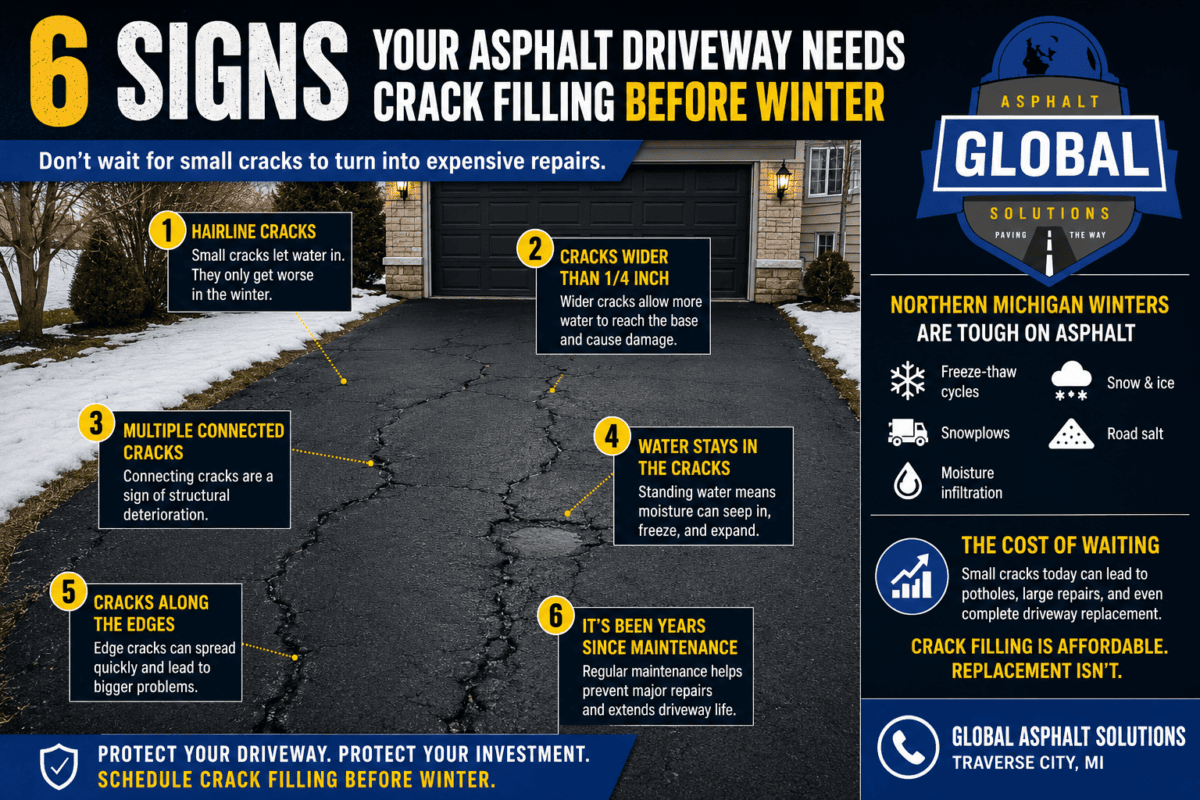
6 Signs Your Asphalt Driveway Needs Crack Filling Before Winter
If you’re a homeowner in Traverse City or anywhere in Northern Michigan, your asphalt driveway faces some of the toughest weather conditions in the country. Snow, ice, road salt, and repeated freeze-thaw cycles can turn small driveway cracks into major pavement damage before spring arrives.
Many homeowners assume minor cracks aren’t a big deal, but the reality is that even small openings allow water to penetrate the asphalt. Once winter temperatures arrive, that water freezes, expands, and creates larger cracks that can lead to potholes and costly repairs.
If you’ve noticed cracking in your driveway, now is the time to consider professional crack filling in Traverse City. Here are six signs your driveway needs attention before winter arrives.
1. Hairline Cracks Are Starting to Appear
Hairline cracks are often the first visible sign that your asphalt is beginning to age.
Over time, exposure to sunlight, moisture, and vehicle traffic causes asphalt to lose flexibility. As the pavement becomes more brittle, small surface cracks begin to develop.
While hairline cracks may seem harmless, they allow moisture to penetrate below the surface. During a Northern Michigan winter, that trapped moisture freezes and expands, causing the cracks to grow larger.
Addressing hairline cracks early is one of the most cost-effective forms of asphalt maintenance.
2. Cracks Are Wider Than 1/4 Inch
Once driveway cracks become wider than approximately one-quarter inch, they require immediate attention.
Wider cracks allow larger amounts of water to reach the base layer beneath the asphalt. When the foundation becomes saturated, the pavement can begin shifting, sinking, or breaking apart.
If you can easily fit a coin into a crack, it’s time to schedule professional asphalt repair in Traverse City before winter weather makes the damage significantly worse.
3. Multiple Cracks Are Connecting Together
When several cracks begin connecting with one another, it may indicate the early stages of structural pavement failure.
This pattern is often referred to as alligator cracking because it resembles the scales on an alligator’s skin.
Common warning signs include:
- Spiderweb-like crack patterns
- Clusters of interconnected cracks
- Cracking near the garage entrance
- Damage in areas where vehicles frequently park
If caught early, crack filling and preventative maintenance may slow further deterioration. Waiting too long often results in more expensive repairs.
4. Water Remains in the Cracks After Rain
One of the clearest signs your driveway needs repair is standing water inside existing cracks.
When water enters damaged asphalt, it weakens the pavement from below. As temperatures drop, the water freezes and expands by nearly nine percent, putting tremendous pressure on the surrounding asphalt.
This freeze-thaw cycle repeats throughout the winter, causing cracks to widen and deepen.
A crack that seems minor in September can become a major repair project by spring.
5. Cracks Are Forming Along the Edges of Your Driveway
The edges of an asphalt driveway are particularly vulnerable because they have less support than the center portion of the pavement.
Edge cracking may be caused by:
- Poor drainage
- Erosion beneath the driveway
- Vehicles driving too close to the edge
- Water infiltration beneath the asphalt surface
Left untreated, edge cracks can spread quickly and eventually cause chunks of asphalt to break away.
Professional crack filling can help prevent further damage and extend the life of your driveway.
6. It’s Been Years Since Your Last Asphalt Maintenance Service
Even if your driveway doesn’t have severe visible damage, preventative maintenance remains essential.
Most asphalt driveways in Michigan benefit from routine maintenance services, including:
- Crack filling
- Sealcoating
- Drainage inspections
- General pavement evaluations
If it’s been several years since your driveway received professional maintenance, now is an excellent time to schedule an inspection before winter arrives.
Hairline Cracks vs. Structural Cracks: What’s the Difference?
Not all driveway cracks are the same.
Hairline Cracks:
- Thin surface cracks
- Usually caused by aging and oxidation
- Often repairable with crack filling
- Best addressed before they expand
Structural Cracks:
- Wider and deeper damage
- Often indicate base failure beneath the asphalt
- May require patching or reconstruction
- Can lead to potholes and surface collapse
The sooner cracks are identified, the more affordable the repair process typically becomes.
Why Traverse City Winters Make Driveway Cracks Worse
Homeowners throughout Traverse City experience unique pavement challenges due to Northern Michigan’s climate.
Winter weather exposes asphalt to:
- Frequent freeze-thaw cycles
- Heavy snowfall
- Ice accumulation
- Snowplow stress
- Road salt exposure
- Extended moisture infiltration
These conditions accelerate crack growth and can dramatically shorten the lifespan of an asphalt driveway when maintenance is delayed.
The Cost of Waiting Too Long
Many homeowners postpone crack filling because the damage appears minor. Unfortunately, small cracks rarely stay small for long.
Ignoring cracks can lead to:
- Pothole formation
- Large asphalt patches
- Drainage problems
- Base failure beneath the pavement
- Partial driveway replacement
- Complete driveway reconstruction
In most cases, professional crack filling costs only a fraction of what major asphalt repairs or replacement will cost later.
Schedule Crack Filling in Traverse City Before Winter Arrives
If you’ve noticed any of these warning signs, don’t wait until snow and freezing temperatures make the problem worse.
At Global Asphalt, we provide professional crack filling in Traverse City, driveway maintenance, sealcoating, and asphalt repair in Traverse City for homeowners throughout Northern Michigan.
Our team can identify small issues before they become expensive repairs, helping you protect your investment and extend the life of your driveway.
Contact Global Asphalt today for a free estimate and get your driveway ready for another Northern Michigan winter.